Autistic Adult Without Support : What Life Looks Like Later On
Autistic adult without support, this is what life can look like later on when there was never a safety net to begin with.
People spend a lot of time talking about childhood interventions for autism. Very little attention is given to what happens when that child grows up — especially when the right support was never there to begin with.
A common assumption is that autistic children grow up with some kind of safety net, and that adulthood introduces new challenges once that support fades. But that assumption doesn’t hold true for everyone.
In my case, there was no safety net to begin with. Support didn’t disappear in adulthood it was never present in the first place. That changes the entire shape of what life looks like later on.
This isn’t a hypothetical question for me. It’s the baseline I’ve lived from.
What “No Support” Means for an Autistic Adult
I grew up in an environment that didn’t allow self-expression. There was no space to articulate thoughts, emotions, or confusion. Being different wasn’t explored or understood it was something to be corrected or ignored.
Before that, the only model of care I knew came from my adoptive mother, who raised me from infancy until I was six years old. When I was suddenly relocated to live with my biological father, that entire framework disappeared. There was no transition, no explanation, and no attempt to bridge what I had known with what I was being placed into.
At seven years old, I was given keys to my house. At the time, it might have looked like responsibility or independence. In hindsight, it was something else entirely an early signal that I was expected to manage myself without guidance, supervision, or emotional grounding.
When people talk about a lack of support, they often imagine it in abstract terms. What’s less discussed is how destabilizing it is to be placed into an environment that does not translate your needs especially when you’re already sensitive to the world in ways you don’t yet have language for.
When I was relocated to live with my biological father, I was suddenly surrounded by people I didn’t know, including him. There was no emotional connection to fall back on, no gradual transition, and no attempt to understand how differently I experienced my surroundings.
Sensory Needs Without Translation
One of the first places this showed up was through sensory overload. As a child, I had strong sensitivities to food. With my adoptive mother, this was accommodated naturally. I ate the same meals repeatedly because they were the only things my body could tolerate. No one labeled it or analyzed it, it was simply honored.
In this new environment, that understanding disappeared. I was expected to eat unfamiliar foods that my body physically rejected. When I cried or resisted, it was interpreted as misbehavior rather than distress. Over time, this led to severe malnourishment not because food was unavailable, but because my needs were unintelligible to the people around me.
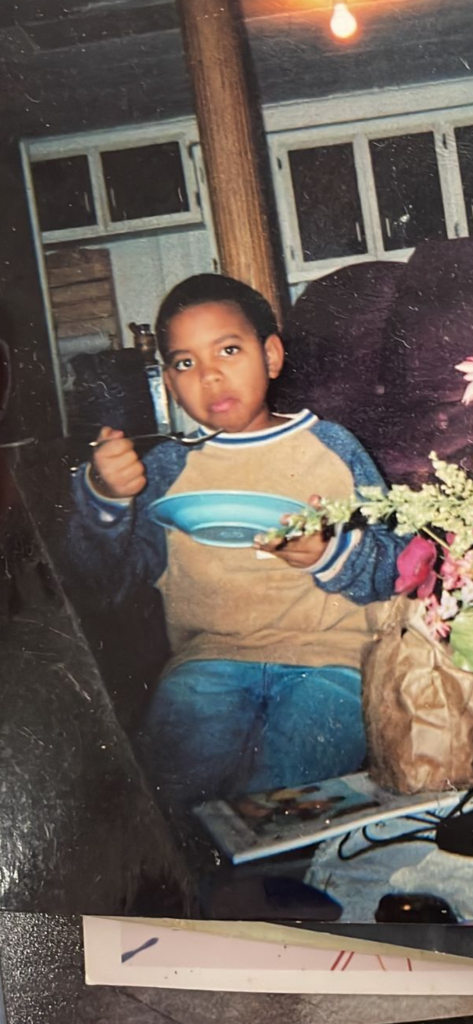
Childhood Sensory Regulation
Before I was relocated, I slept between my adoptive mother and grandmother. I struggled with sleep from a very young age, and although no one had language for autism or sensory processing at the time, my mother seemed to understand instinctively that I needed deep physical pressure to calm my body. She would sleep close to me, often applying steady contact and weight that allowed me to rest.
At the time, this wasn’t framed as an intervention. It was simply care.
When I was moved into a new environment, that regulation disappeared overnight. I was expected to sleep alone, in a different bed, in a different climate, in a different household, with a person I didn’t yet know. There was no recognition that something essential had been removed, and no attempt to replace it with another form of grounding.
Looking back, I can see that this loss wasn’t minor. It was the removal of a stabilizing mechanism my nervous system depended on — similar to how weighted pressure is now understood to help regulate sensory overload. At the time, however, it was treated as something I should simply adjust to.
At the same time, I was adjusting to an entirely new climate and set of physical sensations. I had never experienced winter before. Heavy clothing, layers, coats, and sweaters felt overwhelming on my body. I didn’t have words for this discomfort then. I only know now, through education and hindsight, that these were sensory processing issues — not defiance or weakness.
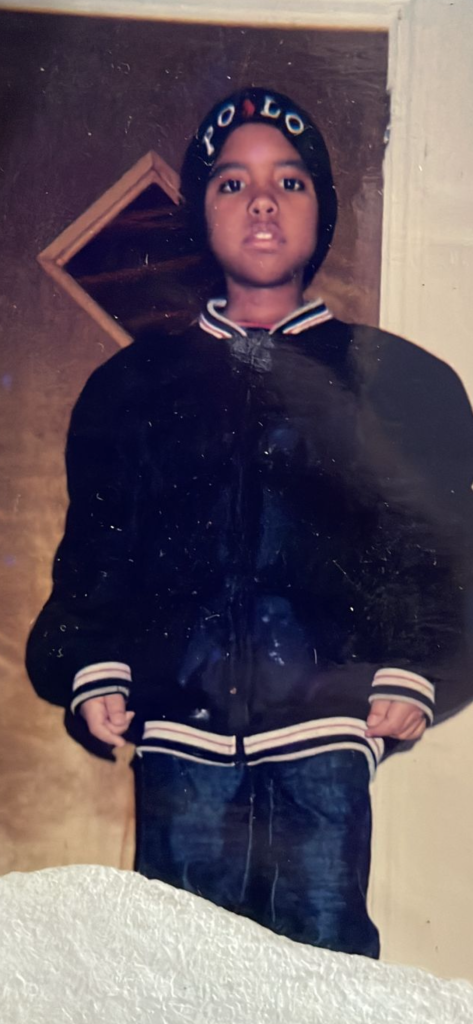
Layered on top of all of this was language. I had to learn English while already struggling to understand the unspoken “language” of human interaction — the rules, cues, and expectations that others seemed to absorb intuitively. I was navigating a new country, a new household, a new sensory world, and a new spoken language simultaneously, without guidance or translation.
This is what “no support” looked like in practice. Not a single moment of neglect, but a sustained absence of interpretation — no one explaining what was happening to me, no one contextualizing my reactions, and no one adapting the environment to meet my needs.
Instead, I was expected to adapt entirely on my own.
My Perspective Now
As an autistic adult without support, I've had to build internal structure and regulation that most people learn through guidance.
I’m writing this from the perspective of a high-functioning autistic adult who grew up undiagnosed. At the time, I didn’t have language for why the world felt overwhelming or why my reactions didn’t match what was expected of me. I only knew that adapting was non-negotiable.
Without guidance or explanation, I learned to mask early. I observed, copied, adjusted, and corrected myself constantly. Social rules weren’t taught to me — they were inferred through trial, error, and consequence. Much of what I now recognize as autistic traits were framed as personal shortcomings rather than differences in processing.
Because there was no external structure to rely on, I was forced to self-educate. I learned how to regulate myself, how to communicate, and how to function in the world by piecing things together over time. There was no roadmap, no mentorship, and no shared language for what I was experiencing.
It wasn’t until adulthood that I could look back with clarity. With distance, education, and reflection, I can now see the patterns that were invisible to me as a child. What once felt like personal failure makes sense through the lens of neurodivergence and prolonged lack of support.
This perspective doesn’t come from theory or hindsight alone. It comes from living the long-term outcome of growing up autistic without guidance — and then having to make sense of it later, on my own.
The Internal Reality of Adulthood
Adulthood, for me, is defined less by external milestones and more by a constant internal state of monitoring. I’m almost always aware of what’s happening inside my body and mind at any given moment. It isn’t panic in the traditional sense, but it is a persistent state of alertness a feeling of always being “on.”
My brain doesn’t filter the environment the way most people’s seem to. I hear things others tune out. Background sounds, shifts in tone, movement around me — all of it comes in at once. Because of that, I’m constantly orienting myself to where I am and what’s happening around me. This heightened awareness can be useful, but it also means my nervous system rarely gets a full break.
Another part of this internal reality is delayed processing. In social situations, I don’t always register the emotional impact of something in real time. If someone says something disrespectful or crosses a boundary, I may not react immediately. It’s often later when I’m alone, meditating, or decompressing that the emotional response arrives.
Social rules are something I learned late and continue to consciously manage. Simple interactions that others handle intuitively require calculation for me. Even something as basic as knowing when to greet someone depends on distance, timing, and context.
Masking plays a role in all of this. In social environments where masking is required, the exhaustion builds quickly. When that energy runs out, I need extended periods of solitude and meditation to recalibrate. Time alone isn’t avoidance it’s recovery.
At the same time, this constant presence has shaped how I see the world. Because I’m always scanning, always connecting dots, patterns emerge easily. This vigilance developed as a survival mechanism, but it comes with trade-offs.
This is the quiet reality of adulthood for me — not visible from the outside, but always active underneath.
Closing
I don’t write any of this as a conclusion or a finished account. This is one perspective, shaped by years of adaptation, reflection, and late understanding. There are parts of this experience I’m still learning how to name, and others that only make sense with time and distance.
What I know for certain is that growing up without support doesn’t end when childhood does. It echoes forward, shaping how adulthood feels on the inside — often in ways that aren’t visible to anyone else.
I’m still learning how to name it. I’ll keep writing as I do.
If this resonated with you whether as an autistic adult, a parent, or someone trying to understand a different way of experiencing the world you’re welcome to stay. You can subscribe to follow along as I continue writing, or leave a comment if something here felt familiar.
This isn’t the end of the story. It’s simply where I’m speaking from right now.